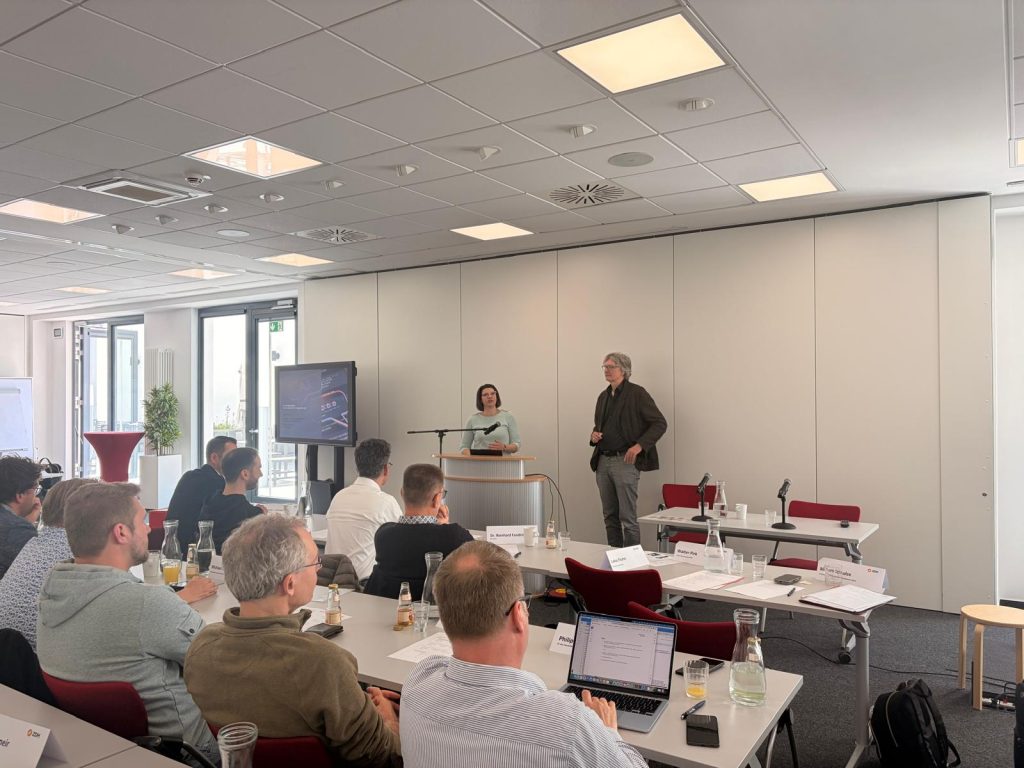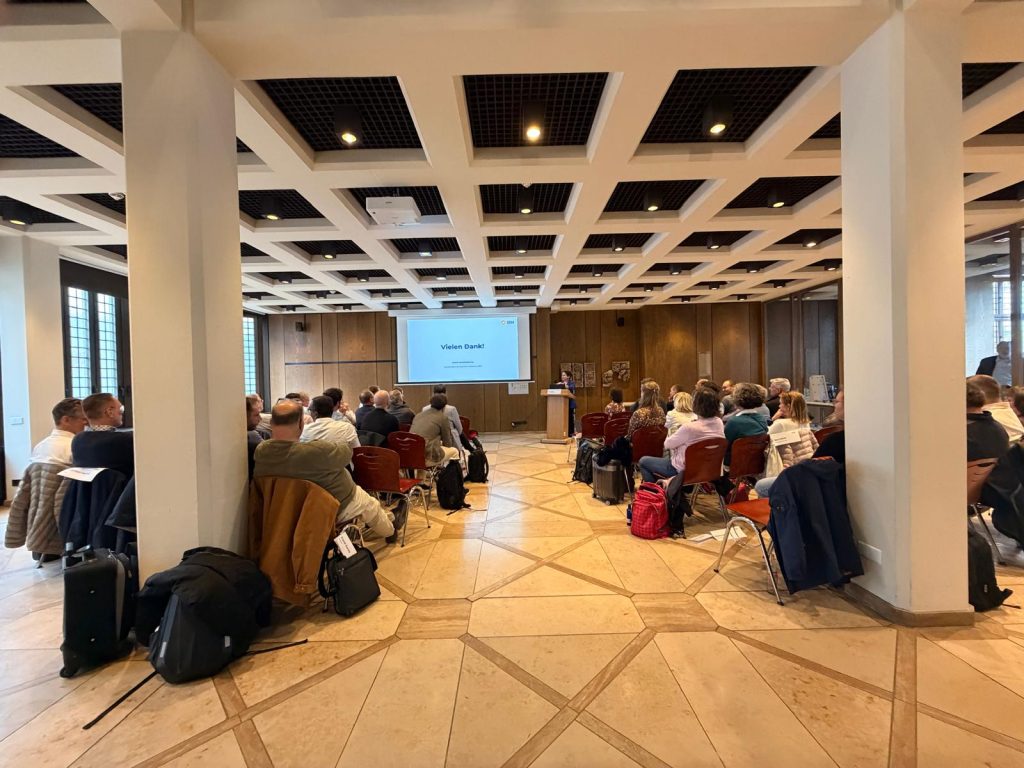
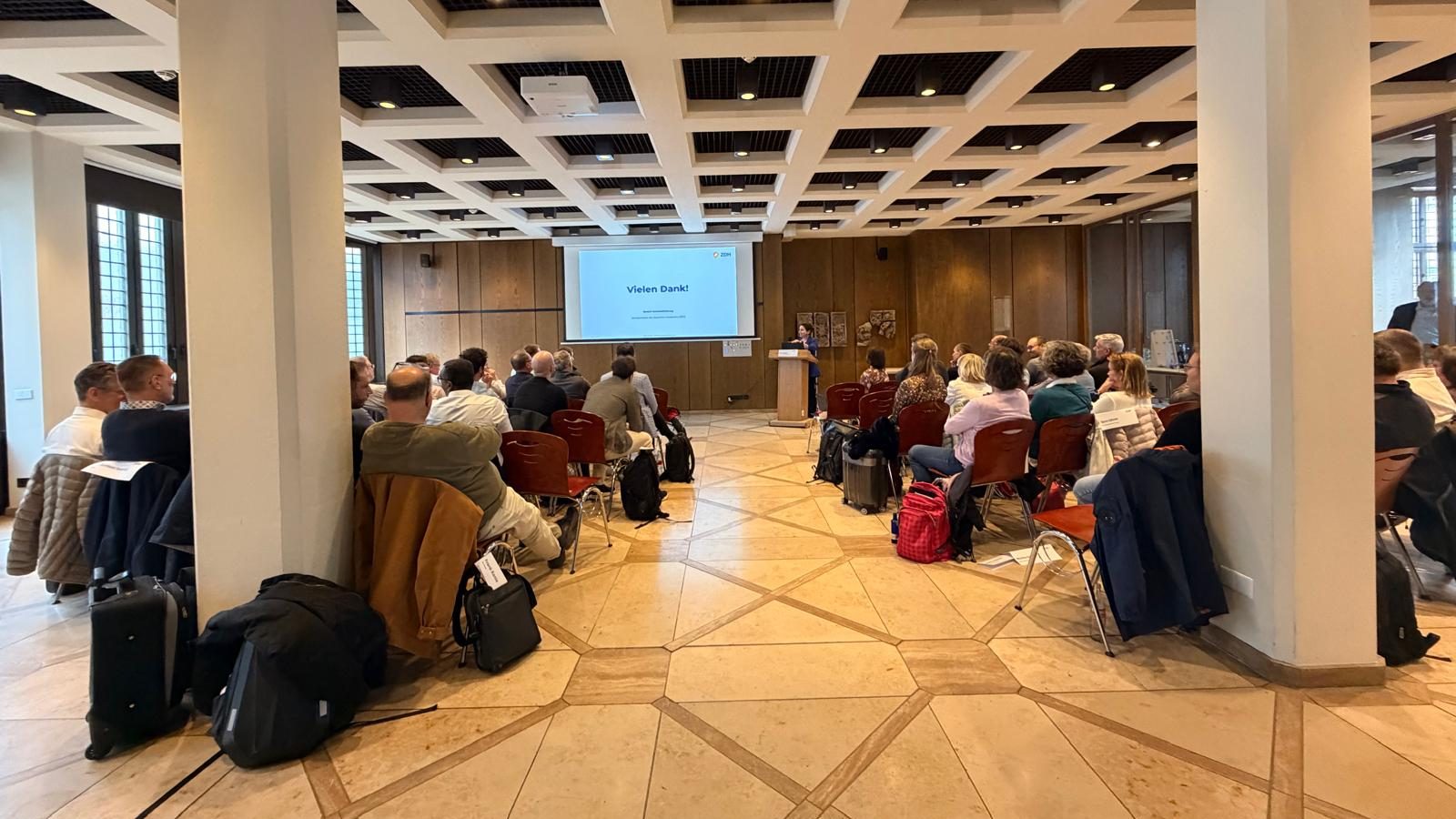
This year’s exchange of experiences among the Specialist Advisory and Information Transfer Centres (FIS) took place in Hanover on 18 and 19 May 2026 – organised by the German Confederation of Skilled Crafts (ZDH), at the invitation of DAISEC and the Central Coordination Office for Technology Transfer in the Skilled Crafts Sector. Around 40 experts from the specialist information centres of the trade associations came together to discuss practical topics for the future: from artificial intelligence and cyber security to digital law, standardisation and municipal heating planning.
Day 1: Standards, Safety and the Law
The first day of the event began at the Leibniz Haus with an overview of the DHI project “Standardisation in the Skilled Trades” presented by Lukas Fischer (Heinz-Piest Institute for Craft Technology). The focus was on how clear, trade-specific standards can drive innovation and improve operational practices.
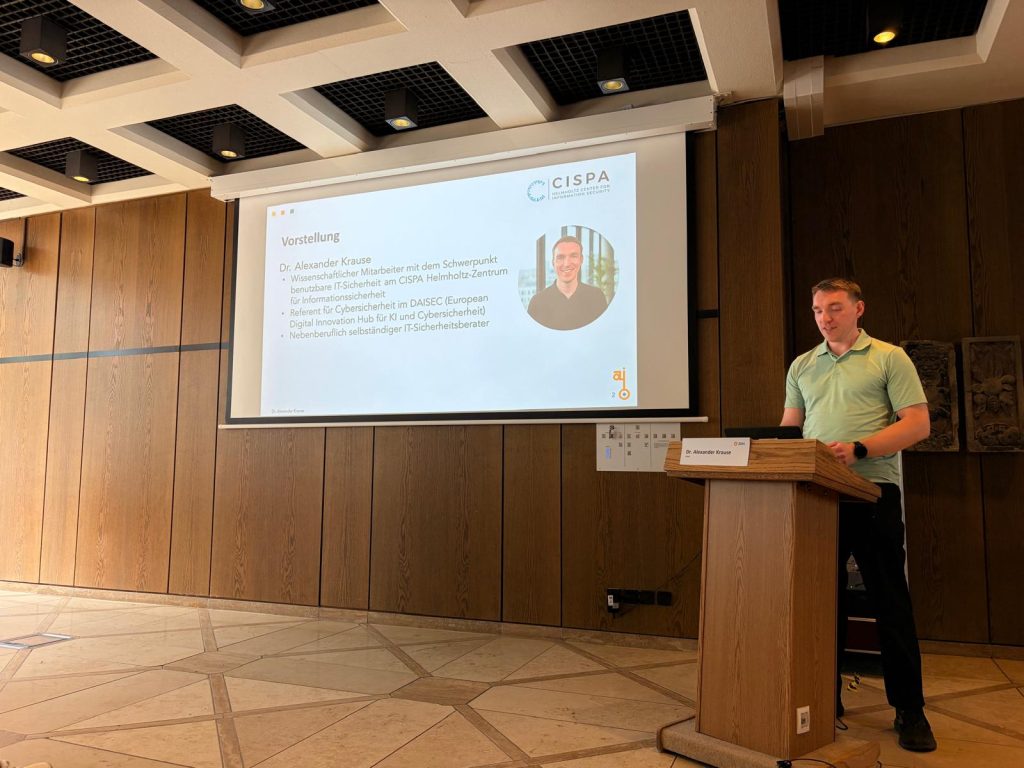
Dr Alexander Krause from DAISEC then highlighted current threats to IT infrastructures and presented suitable support services. For many small businesses, cybersecurity has long since become a fundamental requirement – for reliable processes, secure communication and the protection of sensitive business data. Pia Staudenmaier (DAISEC) rounded off the programme with a presentation on digital law: What legal framework applies to the use of digital tools and data-based applications in consultancy practice? The day concluded with a keynote address by Dr Frank-Peter Ahlers on municipal heating planning – and thus on the close link between digitalisation, energy issues and the role of the skilled trades in regional transformation.
Day 2: Focus on Artificial Intelligence
The second day at the Verdi Höfe was entirely devoted to AI. Alexander Blezinger from DAISEC presented a chatbot platform designed for trade unions and discussed with participants the potential applications and practical requirements for AI-supported support services. Dr Meyer-Veltrup provided an overview of ongoing AI projects within the network of Innovation and Technology Officers.
The highlight of the day was a moderated discussion on the use of AI in participants’ own work and within organisations, led by Walter Pirk (DAISEC) and Miriam Schulze (ZDH). Participants shared specific examples from their consulting practice and discussed how AI tools can be used effectively, securely and with low barriers to entry – taking into account not only technical possibilities but also acceptance, training and feasibility.
Conclusion: Networking is key
The event concluded with a joint review of the findings and initial agreements on specific AI project initiatives. The 2026 FIS Exchange of Experience has demonstrated once again that future technologies are most effective when they are communicated in an accessible way, tested in practical settings and embedded within strong networks.